
First Time Buyers in the Hudson Valley: What We Wish Every Client Knew Before Day One
There's a moment in almost every first-time buyer conversation (somewhere between the Zillow deep dive and the first open house) where the dream meets the details. The dream is the one you know well: morning light through old wavy glass, a garden that gets full sun, maybe a barn you'll "figure out later." The details are the ones nobody warned you about: the septic system, the well, the flood zone map, the two-hour commute on a day the train runs late.
We love working with first-time buyers. Truly. Watching someone find their place in the Hudson Valley (literally and figuratively) is one of the most rewarding parts of this work. But we'd be doing you a disservice if we didn't say this upfront: buying your first home up here is different from buying in the city, and it's different from what the internet tells you it will be.
This is the guide we wish we could hand to every client before day one. Not the glossy version, the honest one.
Your Home Might Not Be on the Grid (And That's Normal)
If you're coming from the city or the suburbs, there's a good chance every home you've ever lived in was connected to municipal water and sewer. In the Hudson Valley (especially outside of villiagees) most homes rely on private wells for water and septic systems for waste.
This isn't a red flag. It's just how rural and semi-rural living works. But it does mean you need to understand what you're buying.
Wells: A well is a private water supply drilled into the ground on your property. During an inspection, your well should be tested for both water quality (bacteria, nitrates, minerals, pH) and flow rate (how many gallons per minute it produces). And unlike city water, you're responsible for maintaining your own water. That means testing it annually and knowing what to do if the power goes out.
Septic: A septic system is your private sewage treatment. It's a tank buried in your yard connected to a leach field (a network of underground pipes that filter wastewater back into the soil.) During a home inspection, we recommend a full septic inspection, not just a visual check. This typically costs a few hundred dollars and can save you from a $20,000–$40,000 surprise.
Septic systems need pumping every three to five years, depending on household size. They don't love garbage disposals, heavy chemical cleaners, or that thing where everyone showers, runs the dishwasher, and does laundry at the same time. A well-maintained system lasts decades. A neglected one fails spectacularly.
What to ask your agent: When was the septic last pumped? Is there an as-built drawing on file with the county? Has the well ever run dry?
Flood Zones Are More Common Than You Think
The Hudson Valley is, by definition, a valley carved by a river. Add in countless creeks, streams, and seasonal runoff, and you've got a landscape where flood risk is real.
As of 2023, New York requires sellers to disclose whether a property is in a flood risk zone or has a history of flooding. This is a relatively new change, previously, sellers could simply pay a $500 credit and skip the disclosure entirely. That loophole is now closed.
Here's what it means for you:
If a home is in a FEMA-designated Special Flood Hazard Area and you're getting a federally backed mortgage (which is most mortgages), you will likely be required to carry flood insurance.
Flood insurance in New York averages around $1,250/year, but it can be upwards of 10x that for high risk second homes.
Standard homeowners insurance does not cover flooding. This catches people off guard every single time.
Not every property near water is in a flood zone, and not every flood zone floods with regularity. But you need to check, and your lender will require it regardless. We always recommend pulling the FEMA flood map for any property you're serious about, and asking the seller directly about any history of water intrusion, basement flooding, or storm damage.
What to ask your agent: Is this property in a FEMA flood zone? What's the annual flood insurance estimate? Has the seller disclosed any flooding history?
Getting Around: The Commute Is Easier Than You Think
A lot of our first-time buyers are coming from New York City or its immediate suburbs, and one of the first questions is always: can I actually get to work from here? The short answer is yes, and it's gotten better than ever.
Metro-North's Hudson Line now runs super-express service from Poughkeepsie to Grand Central in 90 minutes, and from Beacon in under 75 minutes. For hybrid workers doing 2–3 days in the city, which is most of our buyers right now, that's a very comfortable rhythm. You read, you nap, you watch the river go by. A lot of our clients say the train ride is actually one of the better parts of their day.
A few things worth knowing so you can plan smartly:
Express trains run on a schedule, so it helps to build your routine around specific departure times. Most commuters settle into a rhythm within the first few weeks.
Factor in drive time to the station. If you're in Red Hook or Germantown, that's 20–40 minutes to Rhinecliff or Poughkeepsie. Many buyers use this as a filter when narrowing their search, proximity to a station matters if you're commuting regularly.
North of Poughkeepsie, Rhinecliff and Hudson are served by Amtrak rather than Metro-North. Amtrak is comfortable and scenic, though the schedule is less frequent and tickets run higher. Worth factoring in if you're looking in Columbia or northern Dutchess County.
Remote and hybrid work has changed the equation entirely. Many of our buyers commute just one or two days a week, which makes towns further from the train line, places like Chatham, Hillsdale, or Livingston, suddenly very viable.
On Making the Move … Notes from UD Agents

ANTHONY FLORES
Distance feels different up here. In New York City, five miles can take an hour. The city compresses space until even a crosstown trip feels like an expedition. The Hudson Valley inverts that completely. A 30-minute drive here moves you through rolling farmland, river towns, and mountain villages, 20 or 30 miles of actual countryside. You're not stuck in it. You're moving through something.

TRISH DANTZIC
I wish first time buyers knew that "love is blind"! Too often buyers look for a romantic notion and will overlook a property's basic structure and mechanical systems. It's not all that different from dating - commit to substance over looks. It is so important to pay just as much attention to the water heater as to the countertops or the view. Charm can be added, and personality comes with the homeowner but the roof should keep you safe for decades to come.

HARMONY CHEN
Moving to the Hudson Valley from NYC has been like the breath of fresh air that my soul needed. Surrounding yourself with all of the pieces that fit together like nature’s mosaic is so good for the soul. Your first year living in the Hudson Valley is full of exciting new adventures - from watching the leaves change color to raking snow off of your roof. From getting to know your local baker to discovering each local farmer’s specialty. From waking up for an early morning hike to being one of the first to pick strawberries in June. It feels like you’re breathing better for the first time in a long time.

ANTHONY WINTERS
The Hudson valley has a healing energy. Moving here isn’t just a change of address, it’s a change of pace for the soul.
Heating Your Home: What to Know Before Your First Winter
Here's something that catches almost every first-time buyer off guard: heating a Hudson Valley home costs real money, and the way you heat it probably isn't what you're used to.
If you've always lived in a city apartment with heat included in your rent, or a building with natural gas piped in, you may have never thought about heating as a line item. Up here, it's one of the biggest recurring costs of homeownership, and it varies dramatically depending on your fuel source, the age of your home, and how well it's insulated.
The three most common heating fuels in the Hudson Valley:
Oil: The old workhorse. In Ulster County alone, nearly half of all homes heat with oil. A typical Hudson Valley home burns 600–1,000 gallons of heating oil per season, and at current prices (~$4.50–$5.00/gallon in New York), that works out to roughly $2,700–$5,000 per heating season for fuel alone. Oil is delivered by truck, you schedule it or sign up for auto-delivery, and it's stored in a tank, usually in your basement or buried outside. If you're buying a home with oil heat, ask when the tank was last inspected or replaced. Underground tanks, in particular, can be expensive environmental liabilities if they leak.
Propane: Common in homes without natural gas access, especially newer builds and homes with gas ranges or on-demand hot water. Propane runs a bit less per gallon (~$3.50–$4.00), but you typically use more of it. Budget roughly $3,000–$5,000/year depending on how much of your home runs on it. Like oil, it's delivered and stored in a tank on your property, that large tank near the driveway isn't a relic, it's your fuel supply.
Heat pumps: The newer option, and the one gaining ground fast. Air-source heat pumps run on electricity and work as both heating and cooling, one system, year-round. They're significantly more efficient than oil or propane, and operating costs tend to be lower even with New York's electricity rates (~23¢/kWh). Installation runs $6,000–$15,000 for a whole-home system, though state rebates through NYSERDA can offset a meaningful portion of that. They work well in cold climates now, the technology has come a long way, and many of our clients who've switched say their overall energy costs dropped noticeably.
A few things to keep in mind:
Insulation matters as much as your fuel source. Many older Hudson Valley homes, the beautiful ones with the original windows and the stone foundations, are charming but drafty. An energy audit before or shortly after purchase is one of the smartest investments you can make. NYSERDA offers free or subsidized audits for New York homeowners.
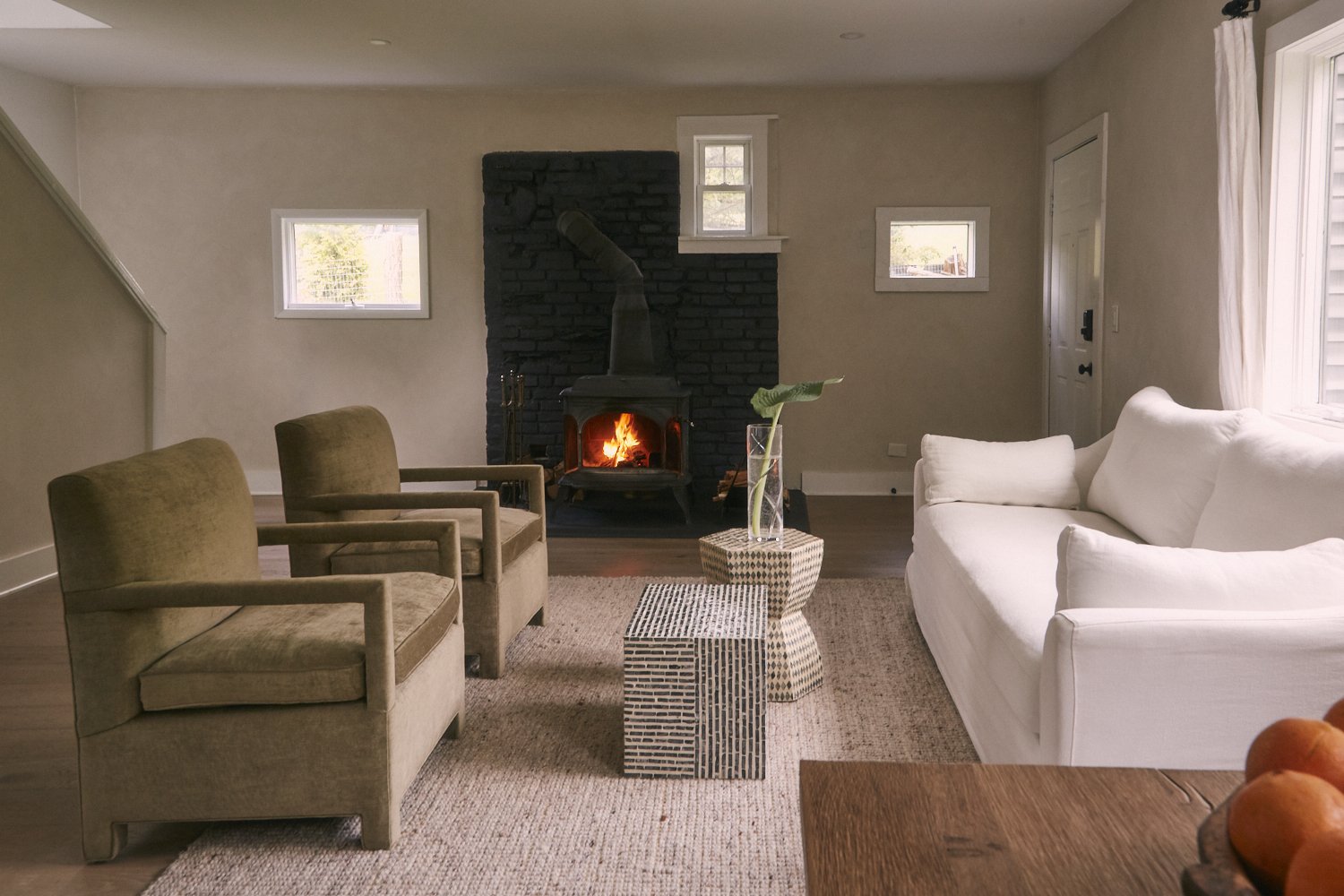
Firewood and wood stoves are common supplements, not full replacements. A cord of hardwood runs about $250–$350, and a good stove can take the edge off your heating bill while making the house smell incredible, but it's not a set-it-and-forget-it solution.
Ask about the home's heating history. Sellers often have records of annual fuel usage.
None of this should scare you off, it's just part of the math. And the good news is that there are real options for managing it. Buyers who understand their heating system and budget for it from the start are the ones who actually enjoy their first winter instead of dreading the next delivery truck.
What to ask your agent:What's the heating system, oil, propane, gas, or heat pump? When was it last serviced? Does the seller have fuel consumption records? Has the home had an energy audit?
We're Here for the Whole Thing
Buying your first home is enormous. Buying your first home in a new place, in a new way of living, in a market with its own language and logic, that's even bigger. We don't take it lightly.
At Upstate Down, we walk this road with our clients from the very first conversation through closing day and beyond. We're not here to sell you a house. We're here to help you find the right place, and then to help you make it yours, in every sense of the word.
If you're thinking about making the move to the Hudson Valley and don't know where to start, start here. Start with a conversation. We'll tell you everything we know, the beautiful parts and the unsexy parts, because that's what we wish someone had done for us.
